

Samia al - Faqi
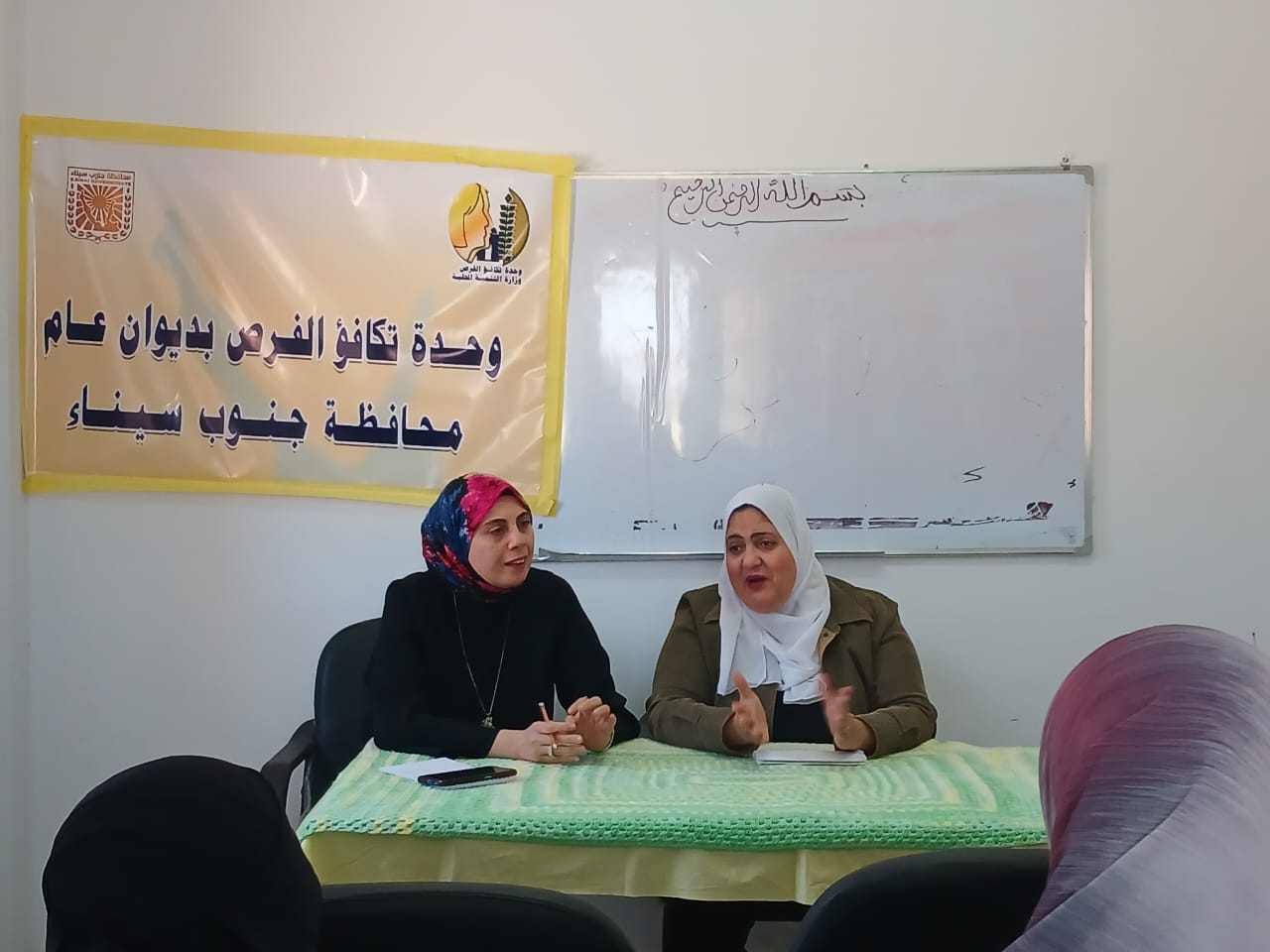
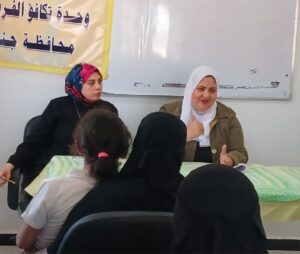
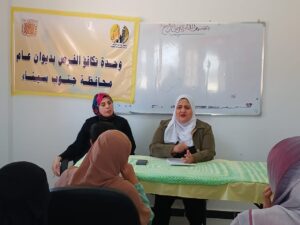
Under the auspices of General Dr. Ismail Kamal of the Governor of South Sinai, under the guidance of Dr. Iman al-Sepki, Director-General of the Central Department of Equal Opportunities of the Ministry of Local Development, and as part of the Lifelong Learning Initiative, the Equal Opportunities Unit organized a special educational seminar in the Department of South Sinai in cooperation with the National Union Academy for the Preparation of Leaders NAU, chaired by Colonel Rama Al-Sh, the Secretary-General of the National Federation of the National Federation, on Personal Information, on Digital Information.
The Colloquium was attended by Professor Amani Al-Minyawi, Deputy Academy of the National Union for the Preparation of Leaders, and addressed a number of key interlocutors. At the outset, it reviewed the concept of adolescence as a pivotal transition between childhood and majority, with deep biological, psychological and social developments, known as the second birth of the personality.
It also highlighted the main characteristics of this phase, including rapid physical changes, mental growth towards mere thinking, as well as emotional fluctuations, and the influence of the peer community as a basic reference in adolescent life.
At the centre of family engagement, the symposium emphasized the importance of building a relationship based on friendship and trust, through good listening, respect for privacy, the adoption of dialogue and participation rather than the imposition of orders, with a focus on positive stimulus to promote self-confidence.
It also addressed the phenomenon of stubbornness among adolescents, pointing out that it often reflected a desire for independence and self-recognition, calling for the avoidance of direct confrontation, the provision of alternatives and options, the quiet handling and containment of the preservation of the educational relationship.
With regard to digital media, the symposium discussed its increasing effects as Third Ranger, noting the positive and negative effects that e-works and digital platforms might have, particularly with regard to social isolation, psychological comparisons and the formation of values and behaviours.
It also presented a set of strategies for the digital protection of children, notably good example in the use of technology, awareness of digital risks, promotion of participation rather than prevention, promotion of realistic activities and clear controls on the use of devices.
The symposium concluded by emphasizing that adolescence is not a crisis, but a real opportunity to build conscious and capable personalities, if handled with awareness and containment, within the framework of the State ' s vision of supporting and empowering young people to be agents of sustainable development and the principle of equal opportunities.