

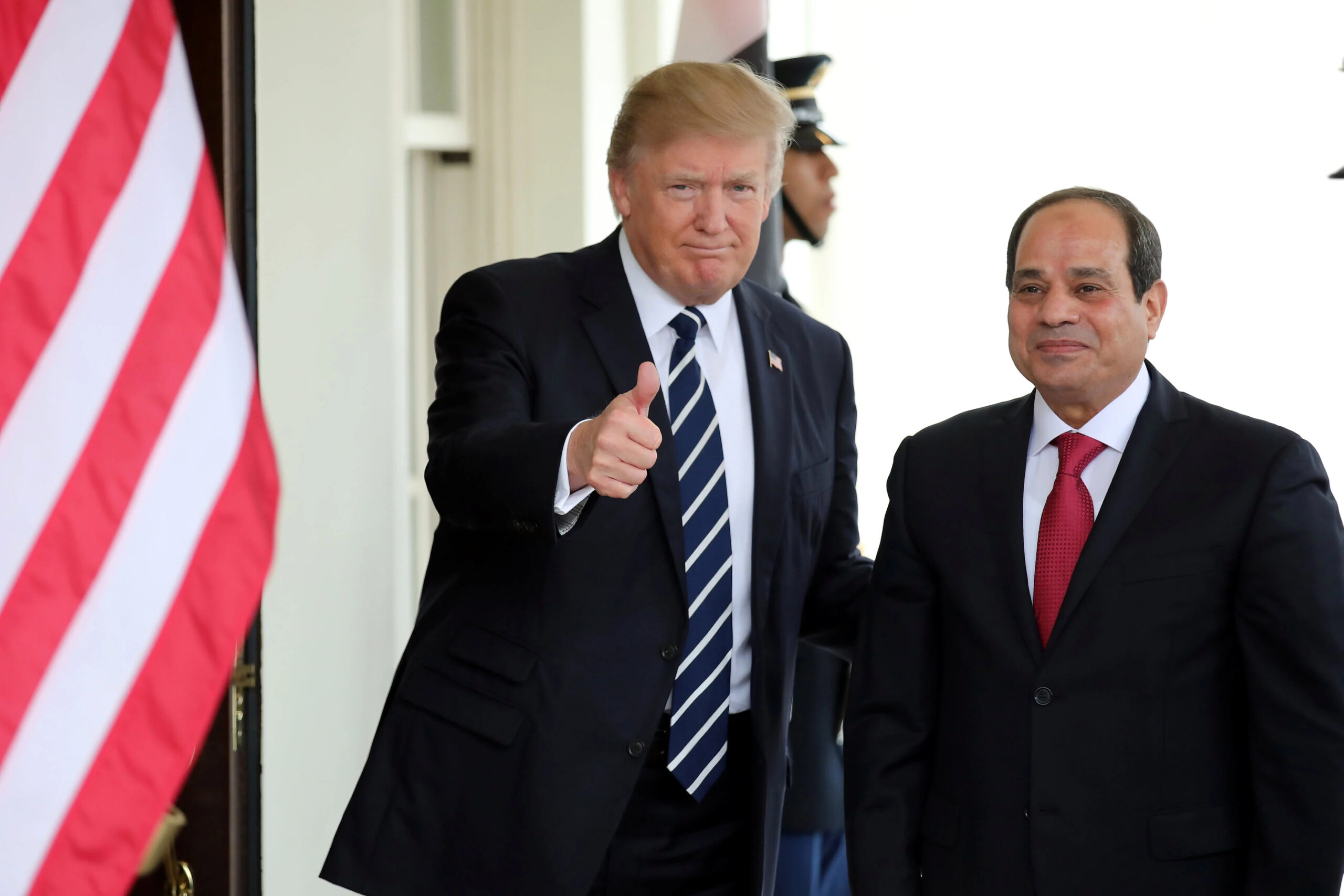
Thanks to the Egyptian efforts under the auspices of His Excellency President Abdel Fattah al-Sisi and through the mediation of President Donald Trump of the United States of America and Emir Tamim bin Hamad Al-Thani of the State of Qatar, an agreement has been reached to stop the war permanently and the return of all prisoners and thousands of Palestinians to their homes.


After two years of destruction and human suffering caused by the war in the Gaza Strip, new hope has finally emerged for a ceasefire agreement between Hamas and Israel and the return of all hostages. While humanitarian and political attention is focused on the immediate repercussions within the occupied territory, the economic outlook is strongly skewed towards its neighbor Egypt, which endured a heavy economic burden during the war and now views the post-agreement period as a golden opportunity for recovery and multiple economic gains.
How did the war affect the Egyptian economy?
The war in Gaza was not just a regional conflict for Egypt, but a storm that shook several corners of its already fragile economy.
- Blow to tourism:
The war was a severe blow to the tourism sector, the lifeblood of Egypt’s economy and hard currency. Regional tensions and instability have led to a wave of cancellations, especially from the European markets that form the backbone of the sector. Not only have areas like Sharm el-Sheikh and Hurghada been affected, but fear has spread to cultural tourism in Luxor and Aswan, causing the treasury to lose millions of dollars and increasing pressure on foreign exchange reserves. - Disruption of trade and navigation:
As tensions rose in the Red Sea, the Bab el-Mandeb road and the Suez Canal, one of Egypt’s most important sources of national income, came under direct threat. Attacks on ships raised insurance and shipping costs, and prompted many shipping companies to take longer and more expensive alternative routes, reducing the expected revenue from ships crossing the canal. This decline in Suez Canal revenues, coupled with the rising cost of imports due to the shipping crisis, was a double blow to the trade balance and balance of payments. - Indirect impact on investment and gas:
The war has raised foreign investors ' concerns about the expansion of instability in the region, making Egypt a less attractive investment environment at a time when it is most urgent. The disruption of regional gas cooperation prospects, particularly with reserves in the Egyptian backfield and potential gas fields off the coast of Gaza, has also eroded potential opportunities to enhance Egypt ' s energy export revenues.
Expected benefits of the Peace Agreement as an economic rescue implementer
The Agreement on Cessation of War is in possession of Egypt ' s economic human resources, which can serve as a way of recovering from the crises that have accumulated, most notably:
Quick recovery:
With the return of relative calm, Egypt is expected to witness a compensatory wave of tourism, which will restore confidence to travellers and global tourism companies. The Egyptian Government can use this opportunity for intensive marketing campaigns that promote Egypt as a safe and attractive destination, thereby reinjecting the hard currency with aggravation, supporting the foreign exchange reserve and reducing pressure on the Egyptian pound.
Suez Canal stability and region trade:
The ceasefire will significantly calm the situation in the Red Sea, encouraging global navigation lines to return to the use of the Suez Canal as the shortest commercial route, meaning that the Channel ' s revenues will return to and increase their natural levels, thus providing an important financial cover for the State to finance its projects and to plan (services) and purchase basic external needs.
Open regional cooperation and reconstruction prospects
Egypt, with its geographical location and strength, is the strongest candidate to play a pivotal role in the post-agreement reconstruction of Gaza. Egyptian companies specializing in construction, construction and infrastructure can have a large share of reconstruction contracts, active local industry sectors and providing thousands of jobs. In addition, political stability may open the way for wider regional cooperation in energy, electrical and gas projects.
Restoring investor confidence:
The Agreement restores Egypt ' s image as a central State of stability in a troubled region: this is a critical psychological factor to attract foreign direct investment, not only in the tourism and real estate sector, but also in the manufacturing, renewable energy and logistics sectors, benefiting from the trade agreements recently signed by Egypt.
From crisis management to opportunity.
Undoubtedly, the continuation of the war in Gaza has been a heavy cost to the Egyptian economy, which was already suffering from internal and external challenges, but the ceasefire agreement is not merely an end to a difficult phase, but a historic life and opportunity to embark on a genuine economic recovery. Egypt ' s success in transforming this opportunity into tangible gains will depend on its ability to move quickly to promote stability, develop effective strategies to attract tourism, and to negotiate smartly to obtain a leading role in the reconstruction of the new Middle East.