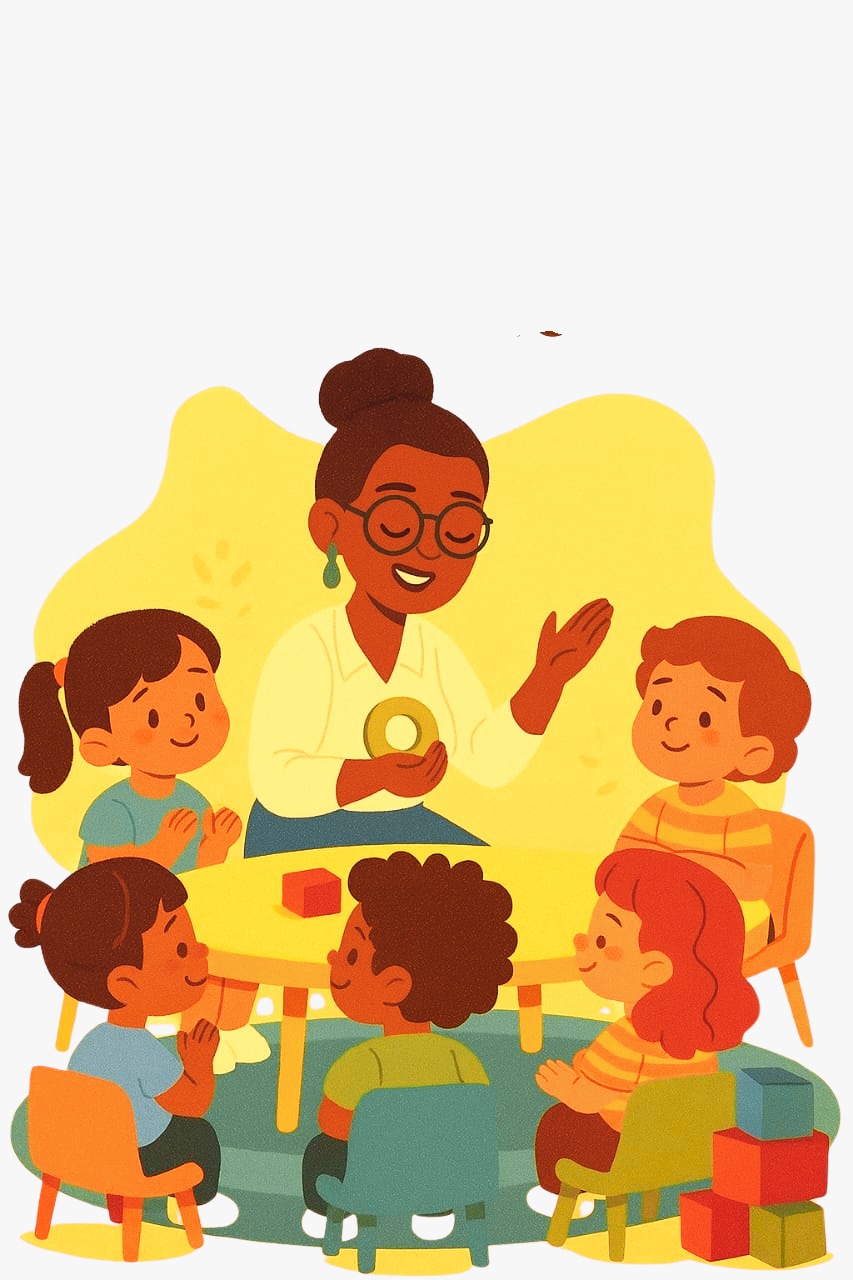
There. Special magic happens in kindergarten classes. He's not loud or dramatic. Often comes whispers. — The first clear English word from a child who only spoke Arabic, or the bursting joy of singing when the movements of the episode time roll into the garden, or the proud look on the face of a parent when his child insists: «Miss Gina says it like that.»- Yeah.
I am. I teach to young children and in preschool. Most of them walk into my classroom wide-eyed, shy, and carrying the burden of their little worlds in a language I don't speak. — Arabic. But children are like sponges, and they are fearless learners. Slowly, almost unnoticed, they begin to reply to me in English. They say at home my sayings about "kindness" and«Participation»They even correct their parents sometimes. — It is a moment of joy and humility for us as adults.
This. Small victories are my pride and joy. It reminds me that early years education is not just about alphabets and counting. It’s about giving children the tools to express, empathize, and imagine.
Classroom Outside the Walls
What excites me most is how learning is not strictly confined within the classroom. He's moving home. Parents tell me about songs sung at dinner tables, or about small corrections from their children that echo the way I instruct them. My kindergarten supervisor even witnessed remarkable growth. — Socially, emotionally and intellectually. — What happens in a year.
Umm Omar, Umm Yahya, Umm Kerma — They all say the same thing: their children don’t just learn words. They become more confident, more expressive, and more socially aware. And this, to me, is where the real work of early years education stands out.
What excites me most is how learning doesn't stay strictly confined within the classroom.
Magic in the Temple
Some people imagine that the early years' classes are like messy clubs. — Kids are running everywhere as the teacher tries to keep order. But I like having a structure for preschoolers. Structured themes, in particular, make the chapter come alive.
Subjects allow children to explore large, sometimes abstract, subjects in the language of the young child. The theme of "friendship" may lead to puppet shows, role-playing and co-playing games. The theme of "garden" may evoke farming activities, insect hunts, or stories of sunlight. These structures don't restrain children. — It gives them the freedom to explore safely.
Why is this important?
Having a passion for teaching is one thing, and having a passion for children is another. But when these two passions meet, magic happens -- children are the biggest beneficiaries.
Early years education often doesn’t get the respect it deserves, especially in places like Africa and the Middle East. Sometimes teachers are mistaken for babysitters. But anyone who enters a classroom with 20 little children knows that we are shaping life. We lay the foundations for resilience, empathy and creativity.
Research confirms that nearly 90% of brain development occurs before the age of six. These years are not just "preparation" for real school. It's the real school.
Author's Confession
I'll admit the work is exhausting. Some days I come home exhausted, covered in paint or play dough, and my voice is almost hoarse. But then I remember Yahya's laughter, or the new confidence Omar has gained, or the way she is now sharing the vine without hesitation. These are the moments that refill my glass.
Teaching the early years is not a fun job. You won't find headlines about it. You won’t see teachers topping the trend on social media to teach them episode time songs. But in quiet ways, we shape the future. We plant seeds. And even if we don’t stay to see the whole flower, we know that the roots extend deep.
This is the quiet magic of teaching the early years.
Early years education is a quiet business. — The greatest classroom is not within four walls, but in the small moments that ripple through homes and the future.

Read also: From Nigeria. Regina M. Adams writes... Why is Egypt’s future linked to the rest of Africa?