

Cairo.
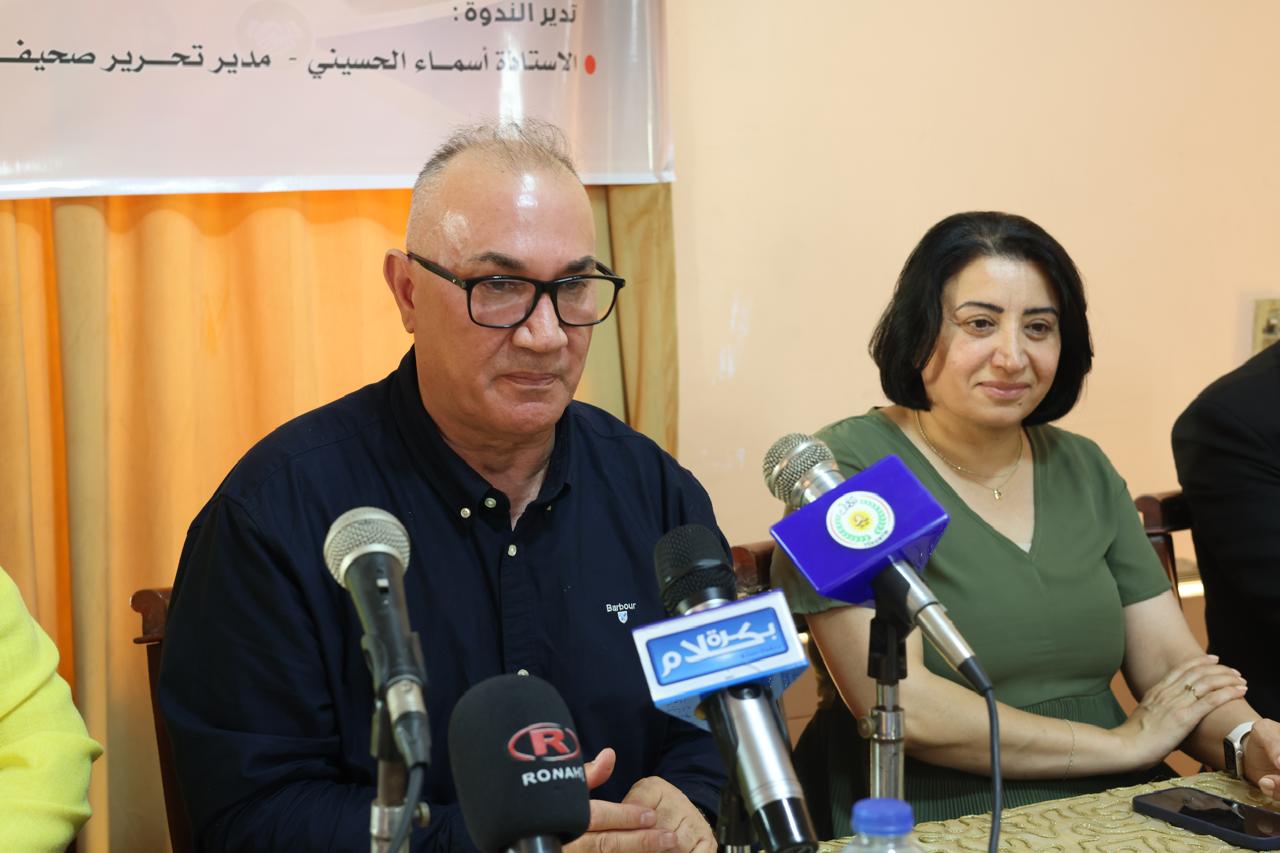
In Cairo today, the Egyptian Cultural Centre hosted a symposium on the culture of acceptance of the other -- from tolerance to partnership, organized by the Elite Center for Publication and Research.
Dr. Mohamed Ihsan, Secretary-General of the Afro-Esian Peoples Solidarity Organization, discussed at the centre of the first symposium (acceptance of the other to human thought and civilization experiences) the evolution of the concept of acceptance across history, the difference between tolerance, coexistence and partnership, and the role of shared human values in building societies, reviewing successful examples of the experiences of multilateralism and diversity in the world.
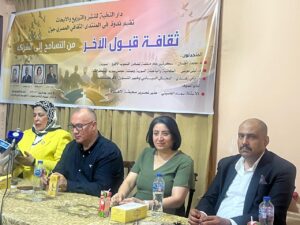
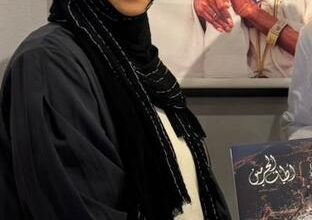
Leila Moses addressed the representative of the Syrian Democratic Council, at the centre of the second colloquium (Arab-Kardian relations... from mutual knowledge to cultural and community partnership), explaining the impact of mutual ignorance in the production of prejudges, historic and cultural partnerships between Arabs and Kurds, the role of Arab intellectuals and media and Kurds in building confidence and the prospects for cultural, educational and community cooperation between the two sides.
Dr. Rami Zhdi, Political Analyst and African Affairs Expert, at the centre of the third symposium (construction of community partnerships in a diverse world), pointed to the importance of moving from coexistence to joint action, the role of youth in the area of dialogue, the contribution of women to building trust between different societies and civil society initiatives as practical models of partnership and cooperation.
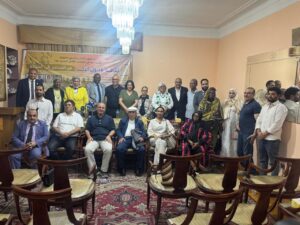
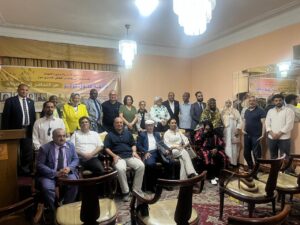
The symposium, moderated by the name of Al-Husseini, editor of the Al-Haram newspaper, was attended by a number of Egyptian and Arab politicians, journalists, media professionals and intellectuals.
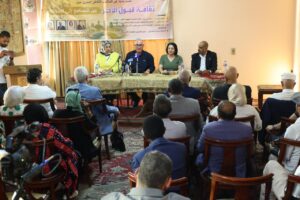
The Colloquium made a series of recommendations that confirmed that acceptance of the other was not limited to recognition of its right to exist, but extended to respect for its privacy and participation in community-building.
The recommendations called for the encouragement of cultural and media institutions to produce content that enhances knowledge between peoples and different components, and to support initiatives that bring young people together from diverse cultural and social backgrounds in joint programmes of dialogue and volunteerism.
The presence of cultural diversity topics and acceptance of others in educational and cultural activities should be strengthened and cultural and artistic exchanges between the various social components should be promoted as an effective confidence-building tool.
It urged support for studies and research on relations between peoples and different components from a cooperative perspective, away from stereotypes and prejudices, highlighting positive models of cooperation and coexistence in the region and highlighting shared success stories.
It noted the importance of strengthening the role of women and youth in initiatives aimed at building bridges of communication and understanding between societies, and launching a periodic dialogue platform that brought together researchers, media professionals and intellectuals from diverse backgrounds to discuss issues of pluralism and coexistence.
Building a more stable future in the region required a transition from the concept of tolerance to the concept of partnership based on mutual respect and common interests.
The exchange of knowledge between Arabs and Kurds should become part of everyday cultural life, by writing books, translation, festivals, information programmes, artistic production and youth initiatives, calling for Arab and Kurdish universities, to establish networks of cooperation, in the areas of scientific research, academic exchange, humanitarian studies and volunteering.
The Colloquium is important in the light of the world ' s focus today on diversity in cultures, identities and affiliations, which makes the culture of acceptance one of the fundamental values necessary for building stable, cohabiting and advancing societies.
The colloquium drew attention to the fact that, although the concept of tolerance had become part of contemporary human discourse, the real challenge was not only to accept the existence of the other, but to move to a more advanced stage of cooperation, partnership and exchange of interests and experiences among different social and cultural components.
She pointed out that in the Middle East region, whose long history had characterized continuous interaction between different peoples and cultures, there was a need to promote a culture of dialogue and mutual understanding, transform diversity from a controversial factor into a source of power and civil enrichment.