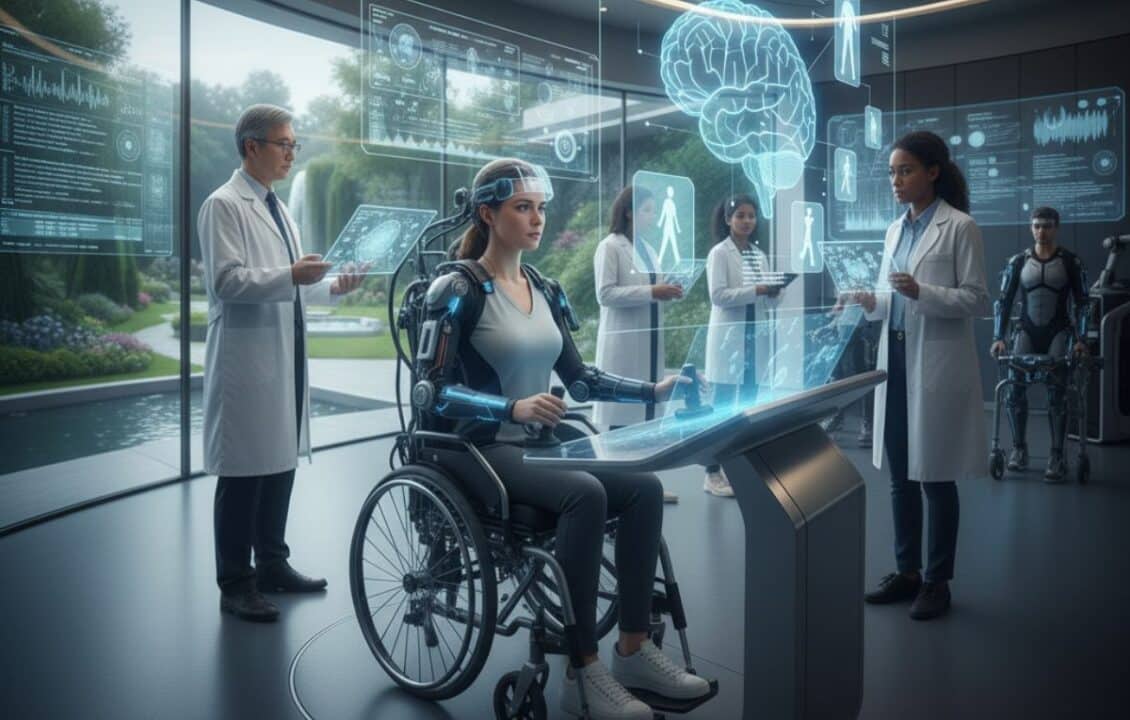
Medical technology has seen spectacular developments in recent years, with a team of researchers creating an innovative brain-computer system without surgical intervention, opening new horizons for users, especially those with mobility disabilities. This revolutionary system relies on artificial intelligence to deliver effective and tangible solutions.
How does the system work?
The system is based on technology. EEG (Electroencephalography)It records nerve signals from the brain and converts them into motion commands that can control a robotic arm or even a screen pointer. This conversion is accurate and fast, allowing users to control technology devices in ways that were once considered science fiction.
The role of artificial intelligence in enhancing communication between humans and machines
The technology also includes the use of an AI camera, which interprets a user’s intentions in an instant. This technology is not just a technological development, but a breakthrough in how people with disabilities interact with the world around them. Thanks to these innovations, patients with paralysis or impaired mobility can regain part of their independence and improve their quality of life.
Impact of the system on society
It is not just a medical tool but a social revolution, helping people interact with others and engage in daily activities. It also contributes to reducing the sense of isolation, and emphasizes the importance of integrating technology in improving human life.
Brain and computer interface
The innovative brain-computer interface is a step towards achieving inclusiveness in society through technology. Its ability to easily and smoothly turn ideas into action opens the doors to a future in which everyone, regardless of disability, can live their lives with dignity and effectiveness. As research and development continues, this initiative marks the beginning of a new era of healing and technological empowerment.