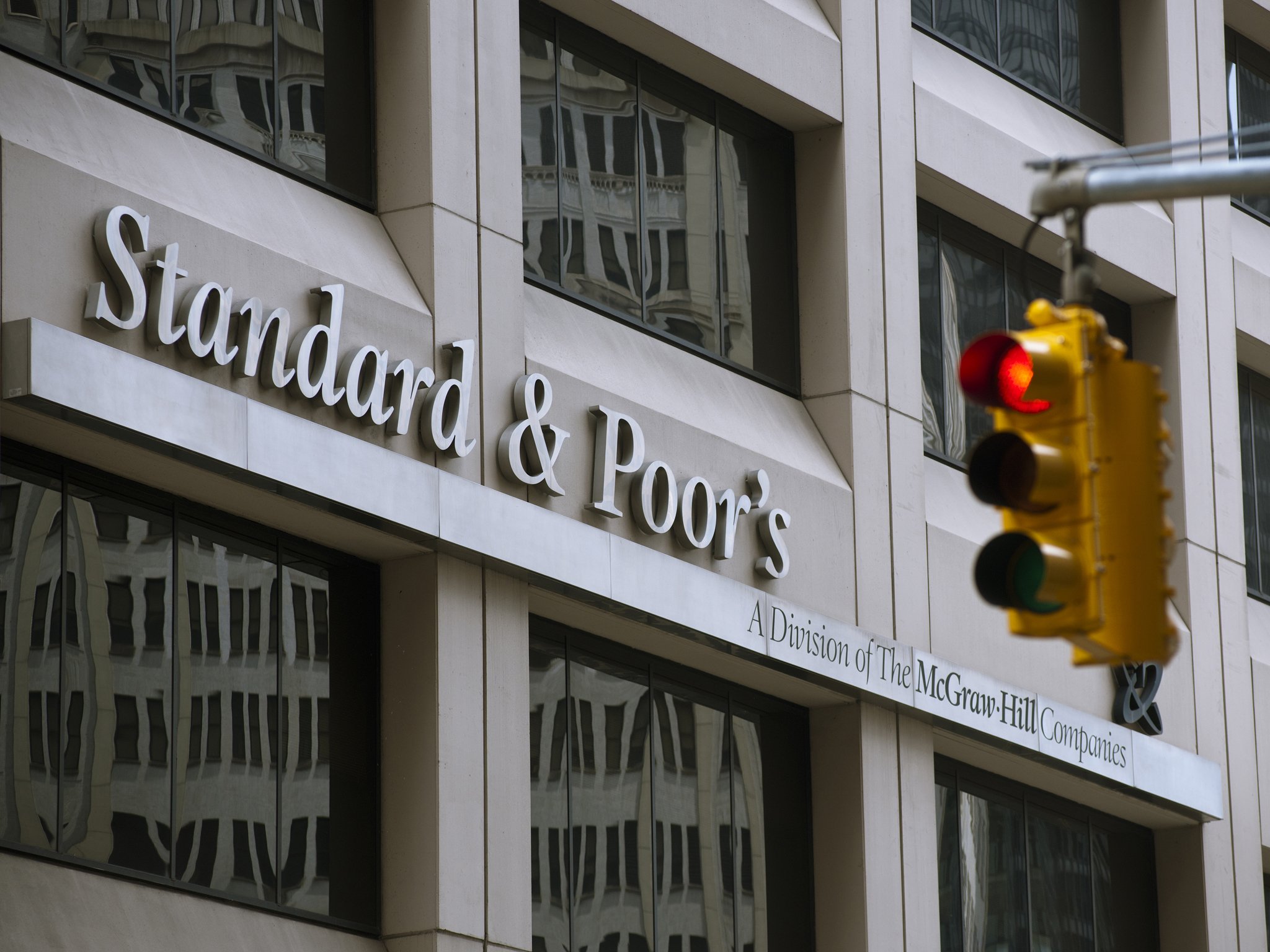
STANDARD AND BURS credit rating agency announced a lift. Credit rating Long-term sovereignty of Egypt to a level «B» Who? «B-»With confirmation of short-term classification, «B»The Agency also increased the assessment of the currency and financial transfers of Egypt to «B» Instead. «B-»I'm sorry.
Stunderd and Bors explained that the decision to raise the classification reflected improved economic growth prospects in Egypt and continued implementation of economic reforms, as well as improved balance-of-payments indicators.
In contrast, the Agency noted that a stable future look reflected a balance of expectations between improved economic performance and sustained pressures on public finance, including high budget deficits, levels of government debt and external obligations.
The Agency stated that the reclassification reflected the economic reforms carried out by the authorities over the past 18 months, including the liberalization of the foreign exchange system, which had led to the recovery of GDP growth in fiscal year 2025, the promotion of tourism and remittances and improved financial and external indicators.
Power of supply and demand
Exchange rate liberalization since March 2024 had made the market subject to supply and demand forces, supporting competitiveness and stimulating economic growth. The country also experienced significant foreign direct investment flows in 2024, the most notable of which was $35 billion in investment from Aboudhabi Development Associated Development Company (ADQ) in the Cape of Judaism project in northern Egypt, as well as IMF and other donors, which contributed to increased foreign exchange reserves and improved external indicators.
In the Agency ' s view, the commitment of the Egyptian authorities to a flexible exchange rate, together with the IMF programme of approximately $8 billion extended to 2026, will continue to support economic growth and public financial control efforts during the period 2025-2028, despite global customs volatility and regional risks.
External financing pressures
Stunderd and Burs said that external financing pressures had declined, and it was expected that net financial flows would cover the current account deficit until 2028, with reserves usable in the Egyptian Central Bank rising to $42 billion by 2028. Net external debt (after deduction of liquid assets) was expected to decrease to an average of 84 per cent of current account income to 2028, compared with an average of 13.4 per cent during 2021-2024.
The Agency expects that financial regulation will continue at a gradual pace, with the Government achieving an initial surplus of 3.5% of domestic product in 2025 and continuing up to 2028, supported by broadening the tax base and rationalizing support.
However, the debt-servicing burden remains extremely high, with interest rates rising to 27.25% in March 2024 increasing the cost of local treasury licences and bonds, and with inflation decreasing since February 2025, the Central Bank began to reduce interest in April and made an additional 100 basis points in September.
Debt service
The Agency expects that debt service costs will gradually decline from 2027, but will remain higher than nominal output growth, with interest-to-income expenditure falling from 73% in 2025 to 49% in 2028.
The real growth of local output rose to 4.4% in 2025 after slowing to 2.4% in 2024, and is expected to average 4.8% in 2026-2028. Growth leads local demand, construction, tourism, communications, trade, agriculture and health care.
Under the IMF programme, the Government is working to broaden the tax base
Under the IMF programme, the Government is working to broaden the tax base, create a more competitive environment between the public and private sectors and establish a framework for privatization of government companies.
The Agency stated that in March 2024 the European Union had announced a financial and investment package for Egypt of Euro7.4 billion ($8.1 billion), comprising 5 billion soft loans, 1.8 billion investments and 600 million euros for bilateral projects, and Qatar had announced an additional investment of $7.5 billion, while the Saudi Public Investment Fund had pledged investments of $5 billion.
The Agency stressed that the GCC States continued to support Egypt in view of its regional humanitarian and political role, noting that the Gulf States had deposited some $20 billion in the Central Bank of Egypt.
Stunderd and Bors said that in December 2023 President Abdelfattah Sese had been re-elected by 89.6 per cent of the votes, and the Government was expected to continue to implement its economic reforms under the IMF programme, taking into account the social and living burdens.
Peace broker
Egypt continued its role as a peace broker and a humanitarian aid corridor to Gaza through the Rafah crossing, noting the hosting of Cairo negotiations between Arab and Israeli negotiators on a new peace plan, and the United States President Donald Trump was scheduled to visit Sharm el-Sheikh on 13 October to sign the Comprehensive Peace Agreement.
The Agency expected to reverse inflation to an average of 10 per cent during 2025-2028 after reaching 34 per cent in 2024, and the current account deficit to decrease to 3.8% of GDP in 2028 of 5.4% in 2024 and 4.2 per cent in 2025.
كما تتوقع أن يتراجع الدين العام إلى 72% من الناتج المحلي في 2028 من 75% في 2024، وأن يبلغ العجز المالي 7.1% في 2026 و6.9% في 2028.
وأشارت إلى أن إجمالي الدين الحكومي بلغ 82% من الناتج المحلي في 2025، مع ارتفاع الإنفاق على الفوائد بنسبة 41%، في حين يتوقع أن يصل عجز الحساب الجاري إلى 4% في المتوسط خلال 2026-2028.
وأكدت الوكالة أن القطاع المصرفي المصري يتمتع بسيولة قوية بالعملة المحلية، إذ بلغت نسبة القروض إلى الودائع 54% في مارس 2025، بينما نمت الودائع المحلية بنسبة 25% سنوياً خلال السنوات الثلاث الماضية.
We recommend: «Launch»Oh, no. New data analytics platform in Egypt
قالت ستاندرد آند بورز، إنها قد ترفع التصنيف مرة أخرى إذا تحسنت مراكز الدين الحكومي والخارجي الصافي بشكل أسرع من التوقعات الحالية، ربما من خلال وتيرة أسرع لتقليص المديونية أو زيادة الاستثمارات الأجنبية المباشرة المدعومة ببرنامج بيع الأصول الحكومية. كما يمكن رفع التصنيف إذا أدت السياسات الهادفة لتنويع الاقتصاد وفتح قطاعات رئيسية أمام الاستثمار الأجنبي إلى تحسين نوعية التمويل الخارجي.
لكنها أوضحت أنها قد تعدل النظرة المستقبلية إلى سلبية إذا تراجعت التزامات الحكومة بالإصلاحات الكلية، بما في ذلك مرونة سعر الصرف، أو إذا عادت الاختلالات الاقتصادية مثل نقص العملات الأجنبية. كما قد تتخذ الوكالة إجراءً سلبياً للتصنيف إذا دفعت تكاليف الفائدة المرتفعة الحكومة لإعادة هيكلة الديون بطريقة تُعتبر تعثراً، أو إذا أثرت التوترات الجيوسياسية والجمركية الحالية على قدرة مصر على الوصول إلى الأسواق الخارجية وتكلفة ديونها.
وأكدت الوكالة في تقريرها على أن زيادة مرونة سعر الصرف تدعم النمو والإيرادات المالية وتخفف الضغوط الخارجية، وأن التزام الحكومة بسياسات صندوق النقد الدولي والإصلاحات الهيكلية سيظل عاملاً أساسياً في الحفاظ على التصنيف الحالي وربما تحسينه مستقبلاً.
We recommend: Egyptian Credit Bureau «Isco RR Ave» 9th Arab Information Security Conference