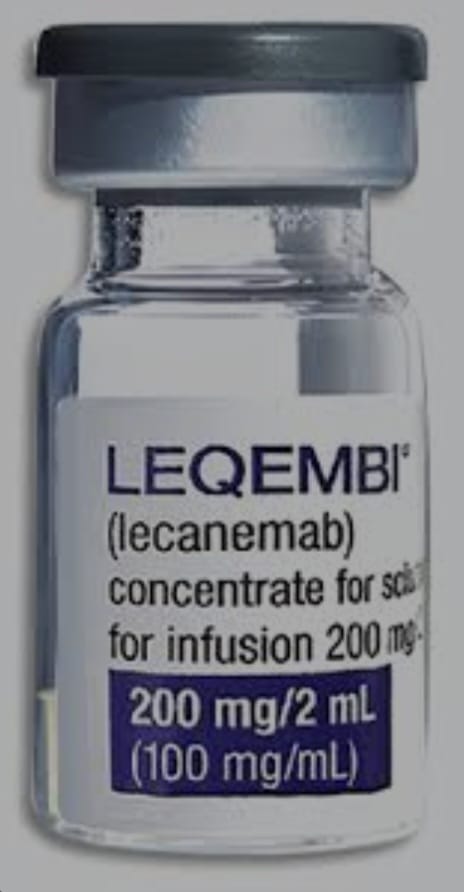
The United States has given regulatory approval for a drug to treat Alzheimer's from pharmaceutical companies Essay and Biogen, which can be given at home similar to some common weight-loss drugs.
The medication was given only as an injection in doctors’ offices, and the procedure takes about an hour. The drug helps slow the rate of cognitive decline in Alzheimer's patients by targeting one of the amyloid proteins that form sticky plaques around brain cells. With this approval, the drug can be administered at home.
The approval is expected to enable Essay and Biogen to better compete with companies such as Eli Lilly, whose Alzheimer’s drug underwent FDA approval last year.
Eisai and Biogen began collaborating on Alzheimer’s treatments in 2014, and Eisai leads both companies in development and regulatory applications. Licombe generated sales of $160 million for Biogen in the second quarter, representing about 6% of its revenue.
New blood tests for early detection of Alzheimer's support Lycombe sales. Alzheimer’s begins well before the onset of memory loss symptoms, and blood tests used to detect Alzheimer’s have nearly tripled in the United States over the past year, said Lynn Kramer, chief medical officer at Essay, in an interview with the Financial Times.
"The goal is to stop it as soon as possible before brain injuries occur. Early diagnosis is very important." "With the new vaccine, this will be a huge improvement in expanding access to Lakemby."
More than 50 million people around the world have dementia, a diagnosis that could include Alzheimer’s disease, according to a 2024 report by the National Institutes of Health. In the United States, where Alzheimer’s is the sixth leading cause of death, research on the disease has broad bipartisan support in Washington. The United States currently spends $3.8 billion on Alzheimer’s research annually.